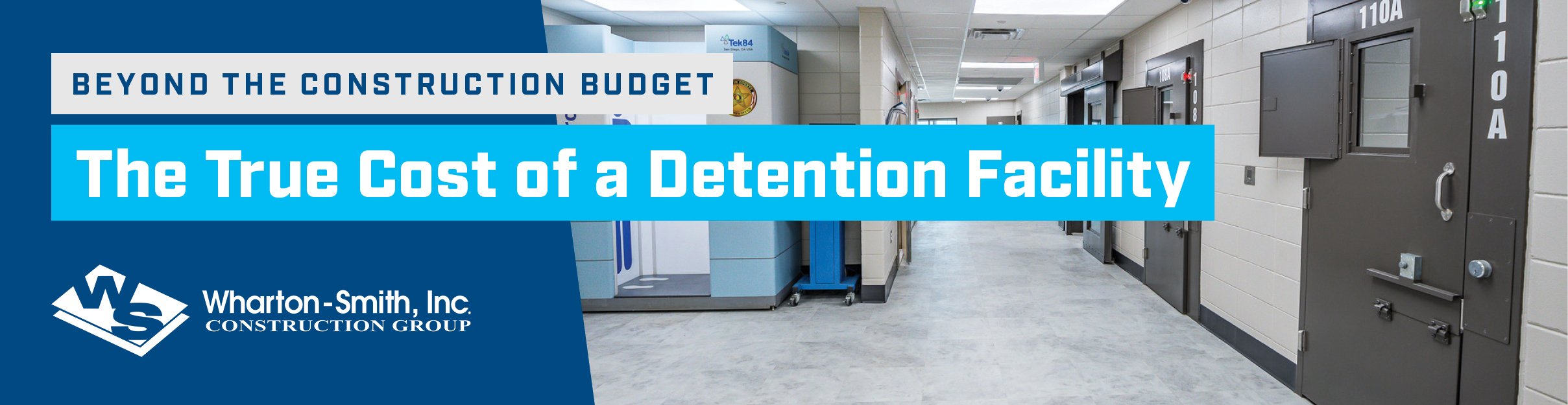
How Early Cost Planning Helps Counties Balance Construction Budgets, Security, and Long-Term Operations
For counties planning a new detention facility, expansion, or renovation, cost certainty means more than establishing a construction budget. Decisions made during planning and design can affect staffing requirements, security, maintenance, and daily operations for decades. When those considerations are addressed too late, counties may face difficult tradeoffs, expensive redesigns, or reductions to features that are important to the facility’s long-term success.
Bringing an experienced construction manager into the process early helps county leaders understand costs, evaluate alternatives, and make informed decisions before those decisions become expensive to change.
Planning for the True Cost of a Detention Facility
Across North Carolina, overcrowding continues to put pressure on local detention facilities. North Carolina Health News reported in July 2026 that more than one-third of the state’s jails had exceeded capacity at some point during the year. Scotland County’s jail averaged approximately 160% of its rated capacity, while Robeson County’s facility, designed for 410 people, housed more than 500 in June. These challenges underscore the importance of planning facilities that address current needs while allowing counties to make responsible long-term investments.
But adding beds alone does not solve every problem. Facility layout, housing configurations, medical and mental health services, staff visibility, inmate movement, and separation requirements all influence how a jail functions. Those choices also affect construction costs and the resources needed to operate the facility.
For example, an open-dormitory housing arrangement may cost less to construct than individual cells, but the right solution depends on security requirements, inmate classification, supervision, and operational needs. Similarly, medical spaces, isolation rooms, and specialized security features may add upfront cost while addressing essential facility requirements. Evaluating these decisions together helps counties understand the tradeoffs before finalizing the design.
DLR Group’s Justice+Civic Leader in North Carolina, Jeff Scott, AIA, notes: “Across North Carolina we see the challenges that Sheriff Offices deal with everyday including aging building systems, fire safety issues, and deferred maintenance obstacles. Ensuring these facilities remain in compliance with State standards can sometimes shock your budget before additional needs are even identified.” Thus, it is critical to begin these conversations between design and construction early and often.
Build the Budget Alongside the Design
Construction Management at Risk (CMAR) and Design-Build delivery provide opportunities to evaluate costs as a project develops rather than waiting until the design is complete. Through ongoing estimates, constructibility reviews, and open discussions with the owner and design team, a construction manager can identify potential cost pressures, compare alternatives, and help keep the design aligned with the available budget.
Reliable estimates also depend on current market information. Wharton-Smith draws on relationships with more than 3,000 subcontractors across the Southeast, along with regional and national relationships with manufacturers, suppliers, and vendors. These connections help the team evaluate pricing, assess availability, and identify potential procurement challenges while there is still time to respond.
Cost planning should also consider the facility’s long-term needs, including maintenance, utilities, equipment replacement, staffing, and the flexibility to accommodate future changes. The goal is not simply to build for the lowest initial price. It is to help counties invest in a facility that meets operational needs and delivers lasting value. “In a lot of the facilities that DLR Group is working on right now, it is imperative that we work collaboratively with our construction team to find cost effective solutions while remaining vigilant of the challenging budgets associated with these projects,” says Scott.
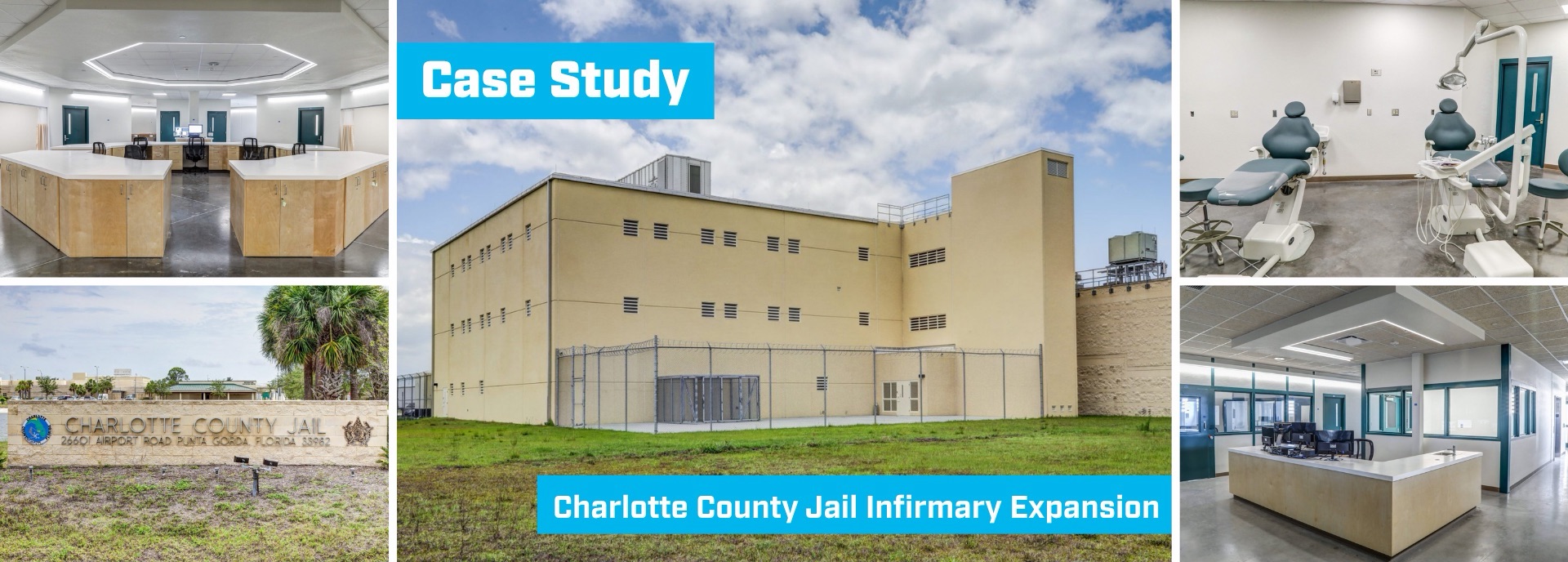
Case Study: Charlotte County Jail Infirmary Expansion
Wharton-Smith applied this approach while providing CMAR services for a 128-bed infirmary expansion at the existing Charlotte County Jail. The multistory facility included inmate clinic exam rooms, a pharmacy, laboratory, EKG area, negative-pressure isolation rooms, direct-observation cells, a mental health area, and dedicated dental facilities.
The project presented an added challenge: construction had to proceed within an occupied, active jail without disrupting daily operations. Security measures included background checks for all on-site workers, accountability logs for tools and equipment, and the addition of security fencing within existing jail pods.
Throughout construction, Wharton-Smith used an open-book cost management process, tracking individual cost items against the Guaranteed Maximum Price (GMP). Working collaboratively with Charlotte County and the design team, the project team continually reviewed costs and identified savings opportunities without compromising the established scope or quality.
The results demonstrated the value of disciplined cost control and close coordination. The project was completed on schedule and under budget, jail staff maintained operations throughout construction, and Wharton-Smith returned $200,000 in savings to Charlotte County at project completion.
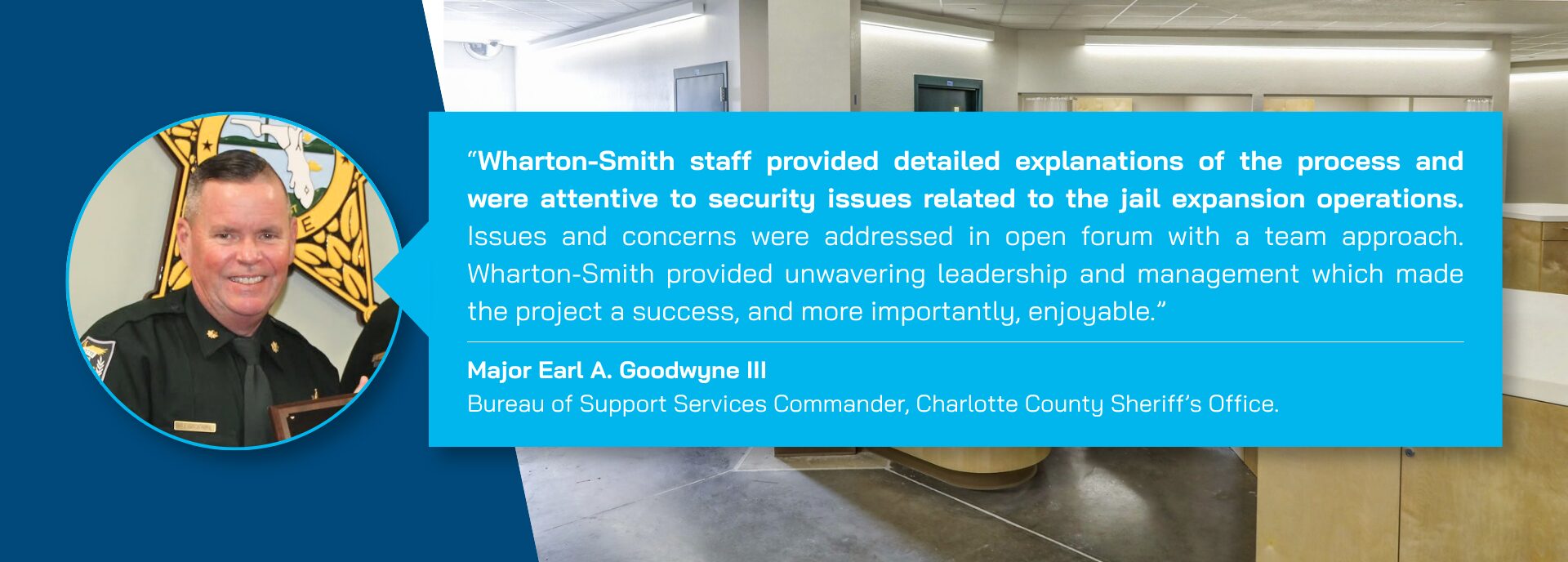
Major Earl A. Goodwyne III, Bureau of Support Services Commander for the Charlotte County Sheriff’s Office, highlighted the value of the team’s approach:
“Wharton-Smith staff provided detailed explanations of the process and were attentive to security issues related to the jail expansion operations. Issues and concerns were addressed in open forum with a team approach. Wharton-Smith provided unwavering leadership and management which made the project a success, and more importantly, enjoyable.”
Cost Certainty Starts with Collaboration
The Charlotte County project illustrates that cost certainty is not a single estimate or a number established at the end of design. It is an ongoing process built on transparent cost tracking, timely decisions, and collaboration among the owner, design team, and construction manager.
For county leaders evaluating their next detention project, involving the builder early creates more opportunities to understand the financial and operational implications of design choices, address challenges before they become costly, and protect the priorities that matter most. The result is a better-informed investment, a more predictable construction process, and a facility designed to serve its community for years to come.
Planning Your Next Detention Facility?
If your county is evaluating a new detention facility, expansion, or major renovation, start the conversation early. Understanding construction delivery methods, budget, phasing, risks, and constructability expertise before design advances can help establish a stronger foundation for the project.
Planned Together. Built with Confidence.
Wharton-Smith, Inc.
Building communities. Building relationships. Your Construction Group of Choice.